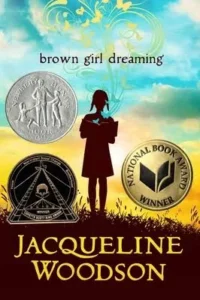
 During the first week of October, those of us continuing to fight for the right to read will—as we’ve been doing since 1982— celebrate Banned Books Week. But it will be extra special this year because the National Coalition Against Censorship has invited communities across the country to organize a “Right to Read” night. Participants will read and discuss the same book: “Brown Girl Dreaming” by Jacqueline Woodson.
The good news? Putnam County, Tennessee is all in. Algood Branch Library manager Andrea Batson and I will lead a discussion at the Cookeville Library on Thursday, October 8 at 6:00 p.m. and at the Algood Library on Friday, November 6 at 11:00 a.m. All ages are welcome.
And speaking of community involvement, Cookeville’s own Plenty Downtown Bookshop will have lots of copies of “Brown Girl Dreaming” available for purchase.
The book, a memoir-in-verse, was published in 2014 to wide critical acclaim. It won the National Book Award and received several other accolades. But I’d never heard of it, let alone read it. The same held true of many of my friends who are avid readers, including teachers and librarians.
So I set out in hopes of discovering why “Brown Girl Dreaming” was chosen for discussion this year during Banned Books Week. It contains no profanity. No sex. No LGBTQ references. No graphic violence. Yet the states of Texas and Florida have ordered it removed from schools. It’s often hard to find on library shelves, especially in the South.
Being a memoir, the story is—of course—about the author’s life, focused on her growing up as an African-American child in the 1960s and 70s. “I am born in a country caught between Black and White,” Woodson writes on the opening page. “My great-great grandfather on my father’s side was born free in Ohio, 1832. My southern grandfather missed slavery by one generation. His grandfather had been owned.”
Perhaps it’s another line, a little further on in the book, that censors dislike most: “My father’s family can trace their history back to Thomas Woodson of Chillicothe, said to be the first son of Thomas Jefferson and Sally Hemings.” (Hemings was, of course, Thomas Jefferson’s slave and the mother of six of his children.)
Or perhaps critics don’t want children to read the part where Jacqueline’s mother insists–when she relocates the family from Ohio to her childhood home in Greenville, South Carolina–that her children move to the back of the bus, despite Rosa Park’s victory in Montgomery in 1956. Perhaps it’s her warning them to step off the curb if a white person comes toward them. “Don’t look them in the eye,” her mother tells them. “Yes sir. No sir. My apologies.”
In addition to Rosa Parks, “Brown Girl Dreaming” also references Martin Luther King, Jr. and Ruby Bridges and Langston Hughes and James Baldwin and Angela Davis and Malcolm X and the Black Panthers. That’s a lot of uncomfortable history to take in.
Jackie’s mother eventually divorced her children’s father and moved the family from Greenville—a place they loved in spite of it all–to Brooklyn. More than 60 years later, Jacqueline Woodson still lives and writes there. She’s the author of dozens of books, ranging from children’s picture books to stories for middle grade readers to adult novels. Many of those books are available at the Putnam County library. Or Plenty Bookshop. Or wherever you choose to get books.
I hope you’ll read lots of them, but especially—for now–“Brown Girl Dreaming.” And I hope to see you at one of the upcoming discussions, celebrating the right to read. During Banned Books Week and always.
(September 26, 2026)