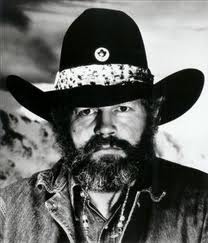
 When a song starts with the words “Well, it was all that I could do to keep from cryin’,” it’s almost certainly going to be good.
If you followed the news last week, you know why I bring this up. Country music outlaw singer David Allan Coe, who didn’t write those words but who made them famous back in 1975, died on April 29 at the age of 86. His death brought back memories. So many memories.
I was country when country wasn’t cool. So were a lot of my friends. Growing up in Nashville in the late 1960s and early 70s, we listened without apology to the music that made our fair city famous. Sure, we enjoyed other kinds of music, but we were country down to our boots.
We loved to head to lower Broadway on a Saturday night, where it wasn’t hard to find a parking spot—free, if I’m remembering right, or maybe there was a parking meter. We’d cruise the shops, Ernest Tubb Records and the Alamo being two of our favorites. Then we’d make our way to the “Mother Church,” the world-famous Ryman Auditorium.
It wasn’t air-conditioned, so the windows were open wide and the ceiling fans cranked up all the way when the weather was warm. Anyone who wanted to was allowed to gather in the alleyway and listen to (or watch, if you were lucky enough to get a good spot) the show for free. That’s how I became a fan of Marty Robbins and Charley Pride and Conway Twitty and Loretta Lynn and George Jones and Tammy Wynette and a whole lot of other country stars.
But it wasn’t outside the big windows of the Ryman Auditorium that I first heard a country song that knocked my socks off. It was on the radio.
That song started with the lines I quoted at the beginning of this column. Space limitations prevent me from including all the lyrics to “You Never Even Called Me by My Name” here, but the ones I like best are these: “The only time I know I’ll hear ‘David Allan Coe’ is when Jesus has his final judgment day,” and “I wrote (Steve Goodman) back a letter and told him it was not the perfect country and western song because he hadn’t said anything at all about mama or trains or trucks or prison or getting drunk.” And I adore the refrain, which goes like this:
And I’ll hang around as long as you will let me
And I never minded standing in the rain
You don’t have to call me darlin,’ darlin’
You never even called me by my name
That’s what I call outstanding writing. Credit goes to both Goodman and to the late great John Prine, “uncredited” by his own choice because he didn’t want to offend the mainstream country music community for writing a song like that.
Coe was part of a revolutionary movement of singers and songwriters who protested, with gritty and honest music and lyrics, Nashville’s overly polished and too-often sanitized sound. With Coe’s death, all but one of the “outlaws,” which included Waylon Jennings, Johnny Cash and Kris Kristofferson, have crossed over that big river. Only 93-year-old Willie Nelson remains.
Will we ever hear songs the likes of “Whiskey River” and “Folsom Prison Blues” and “Me and Bobby McGee” again? Will we ever have a country music outlaw as outlaw-ish as David Allan Coe, who—over the course of his long and troubled life–spent three years in prison for auto theft, slept in a hearse near the Ryman Auditorium, and often bragged about living in a cave, practicing polygamy and having more than 300 tattoos?
Say what you will about Coe, but there’s not likely to be another like him anytime soon. Or maybe ever. You don’t have to call him darlin,’ darlin.’
(May 9, 2026)